
What is wall putty and why does it matter?
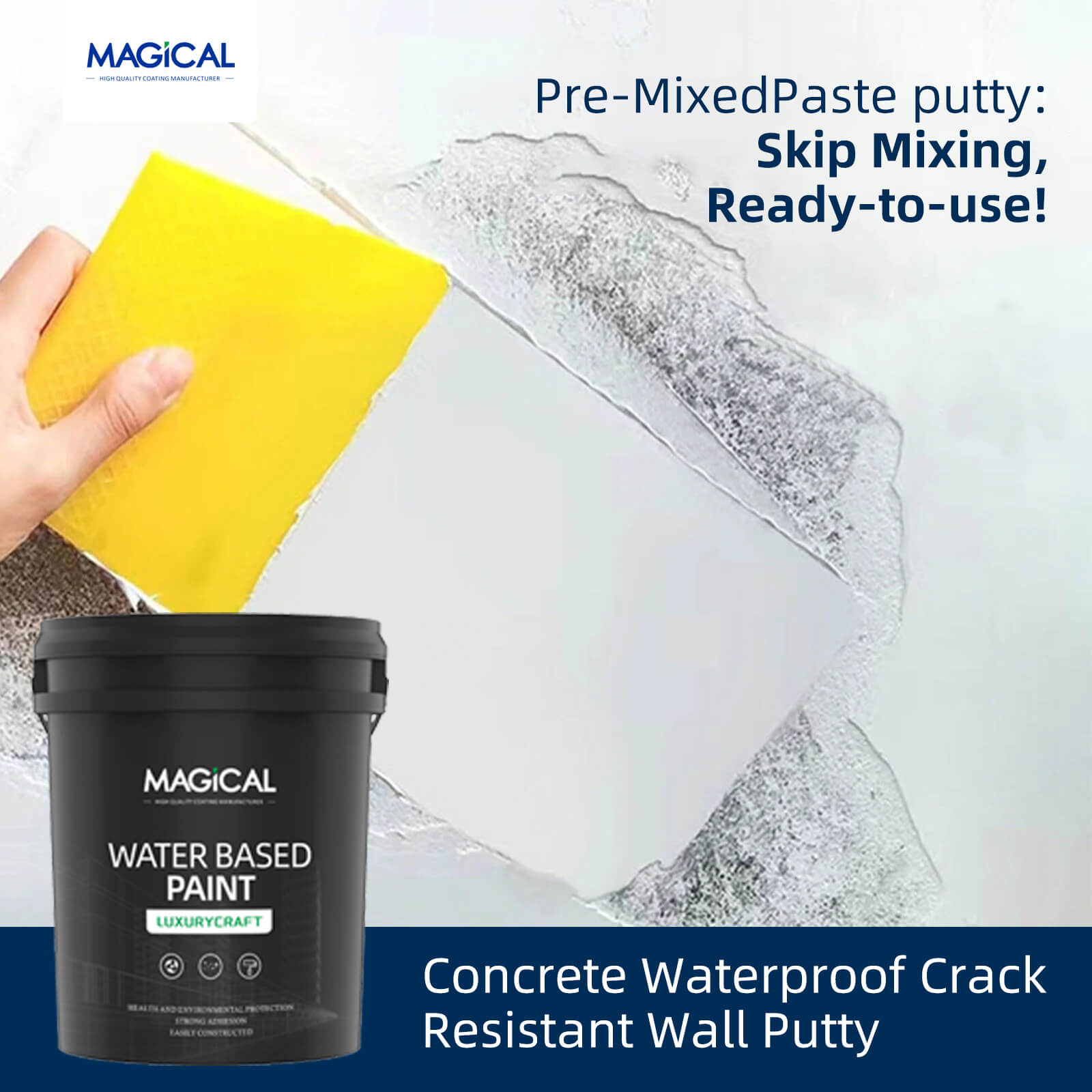
Wall putty is a cement- or polymer-modified powder that is mixed with water and trowelled onto plaster, concrete or gypsum board to produce a smooth, level, low-porosity surface before painting. It fills hairline cracks, closes pinholes and evens out trowel marks, and it reduces the number of topcoat layers needed by giving the paint a uniform, non-absorbent base. MagicalPaint wall putty is formulated for both interior and exterior cement substrates and is supplied factory-direct to contractors and distributors.
Putty vs. skipping straight to paint — what actually changes
| Outcome | With putty | Without putty |
| Topcoat consumption | 20–30% lower | Higher — porous substrate drinks paint |
| Finish uniformity | Even sheen, no patchiness | Visible absorbency variation, flashing |
| Hairline cracks | Filled and bridged | Show through the paint film |
| Paint adhesion | Strong on sound, sealed substrate | Risk of peeling on dusty plaster |
| Repaint cycle | 6–8 years | 3–4 years |
Key performance data
| Property | Typical value | Test method |
| Compressive strength | ≥ 6.0 MPa | GB/T 17671 |
| Adhesion to concrete | ≥ 0.8 MPa | JG/T 157 |
| Water resistance | 98% (48 h immersion, no chalking) | GB/T 1733 |
| Alkali resistance | 48 h saturated Ca(OH)₂, no change | GB/T 9265 |
| Fineness | ≤ 90 µm residue | GB/T 1724 |
| Pot life after mixing | 2–3 h at 25 °C | — |
| Mixing ratio | 25 kg powder : 8–9 L water | — |
| Coverage | 1.0–1.5 kg/m² per mm | — |
| Total build per system | 0.5–2.0 mm (2 coats) | — |
| Recoat time | 4–6 h | — |
Where it is used
- Interior: plaster, cement render, gypsum board, concrete ceilings
- Exterior: cement render and fair-faced concrete under texture or emulsion topcoat
- Renovation: levelling old, uneven or patched walls before repainting
- Pre-paint preparation under Gamazine, Mara stone paint and interior emulsion
Application sequence
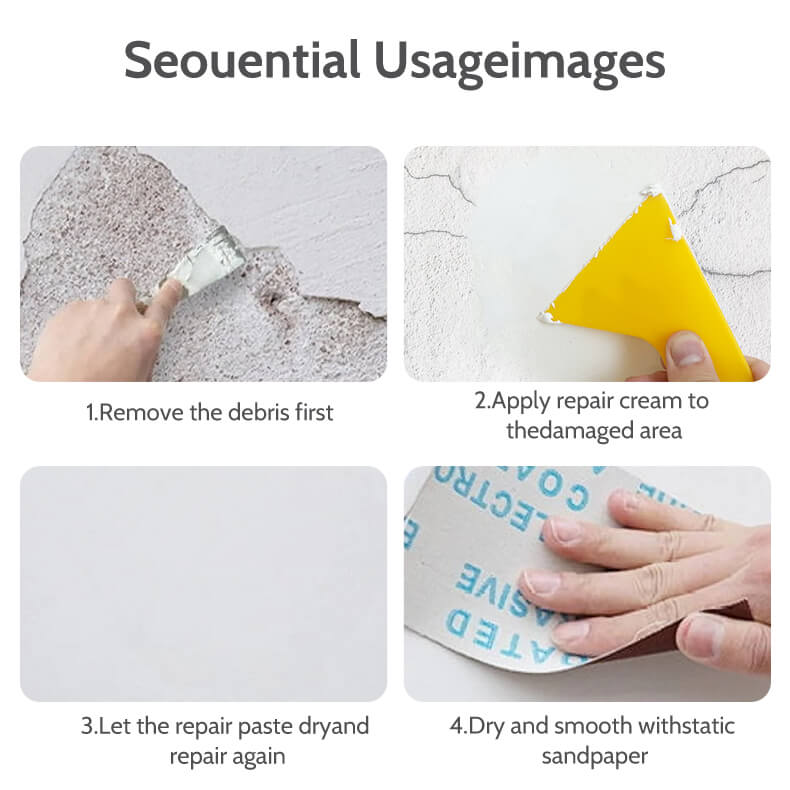
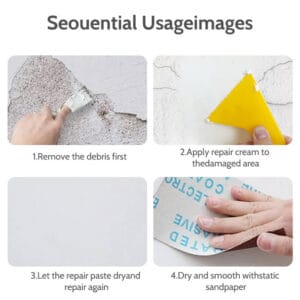
- Substrate: Remove loose material, dust, oil and mould. Dampen highly absorbent substrates before application.
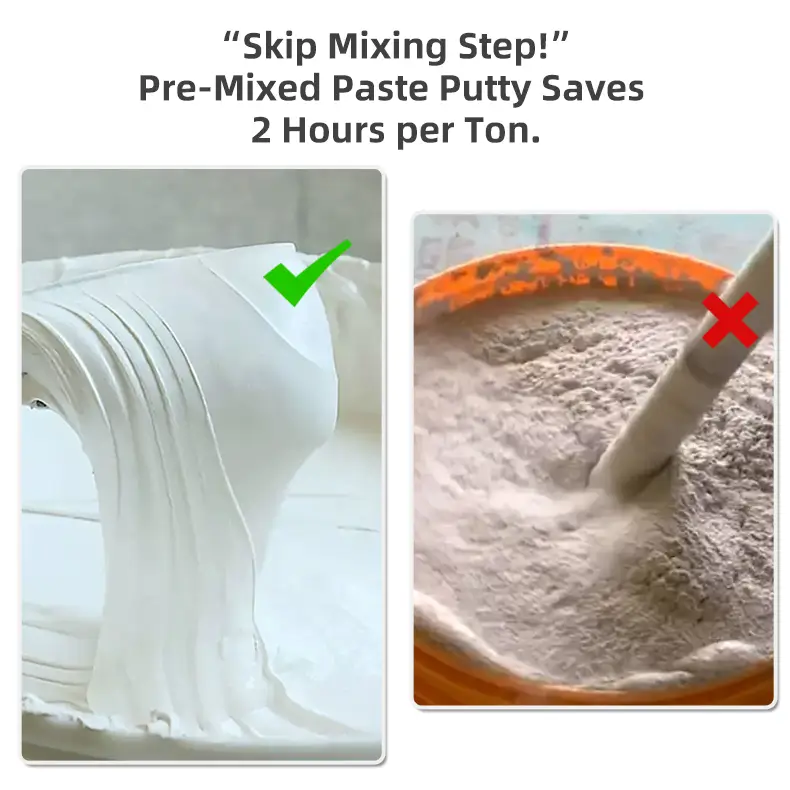
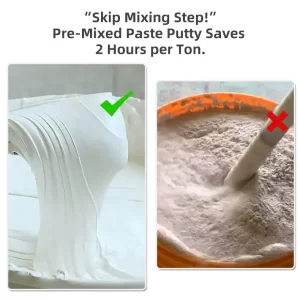
- Mixing: Add powder to clean water (never water to powder) at roughly 25 kg to 8–9 L, and stir to a lump-free paste. Let it stand 5 minutes, then stir again.
- First coat: Apply with a steel trowel at 0.5–1.0 mm, pressing firmly to fill pores and hairline cracks.
- Second coat: After 4–6 h, apply a thinner finishing coat and blade it smooth.
- Sanding: Once fully dry (24 h), sand with 240–320 grit. Wipe down before priming.
- Topcoat: Prime and paint within 7 days — do not leave bare putty exposed to weather.
Common mistakes
- Over-thick single coats (> 2 mm), which shrink and crack.
- Adding too much water to extend pot life, which drops strength below 0.5 MPa and causes chalking.
- Painting the same day — trapped moisture in the putty causes paint blistering within weeks.
- Using interior-grade putty outdoors, where it chalks and washes away in the first rainy season.
Products
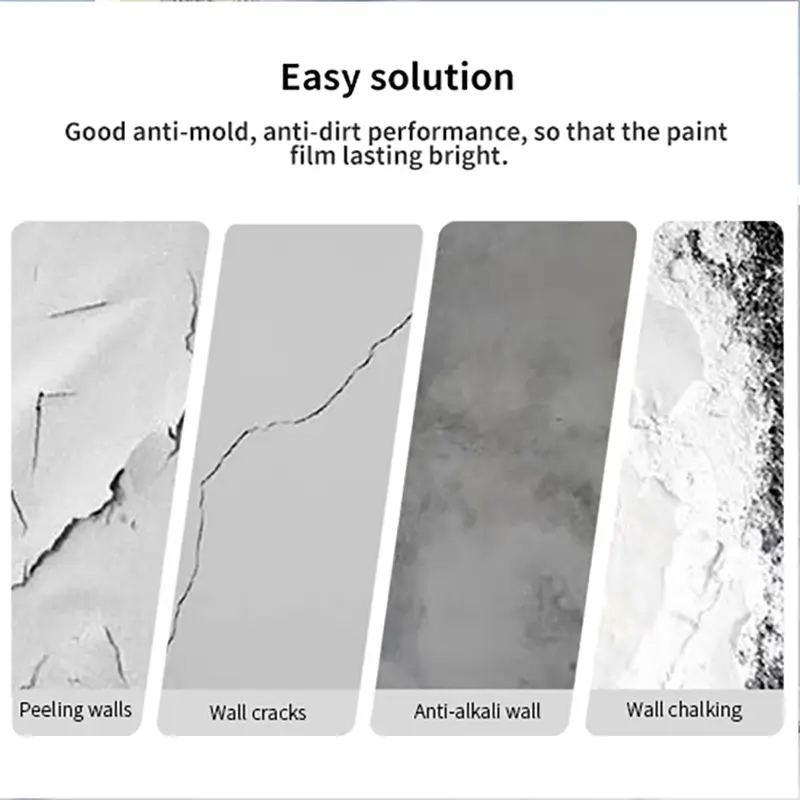
- Strong adhesion to the base layer, with excellent bonding strength, resistant to peeling and aging
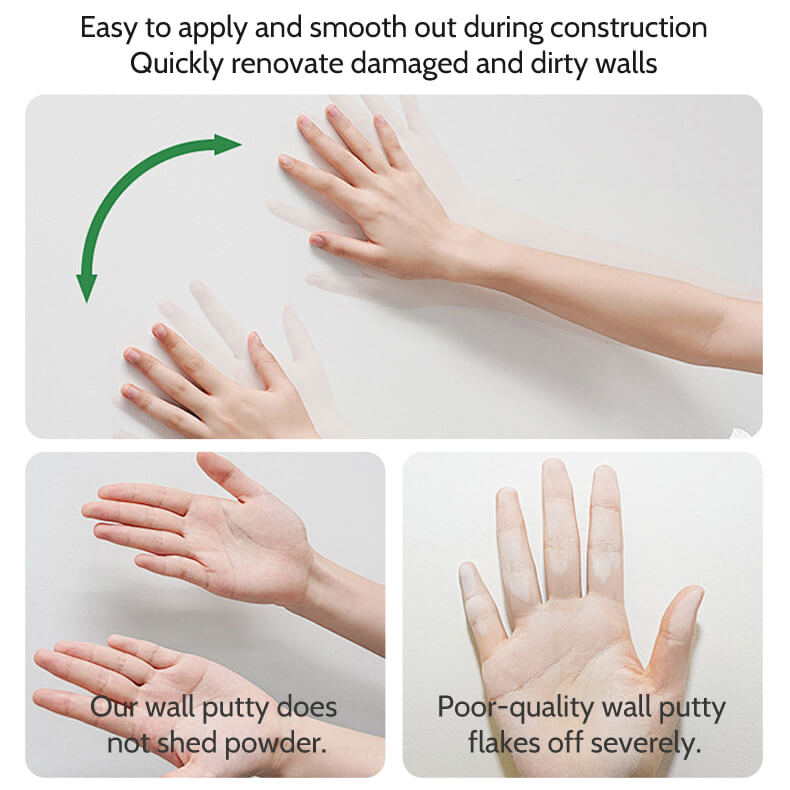
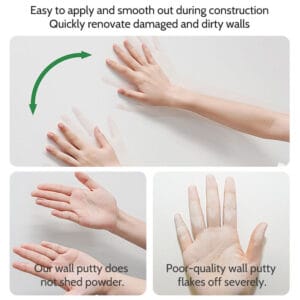
- Easy to apply, good filling properties, and easy to level various gaps
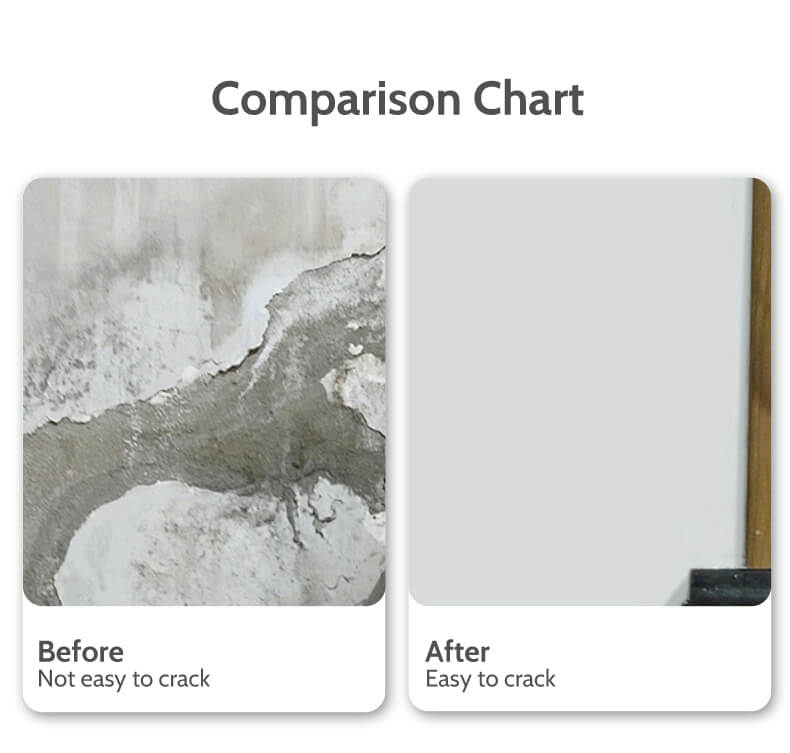
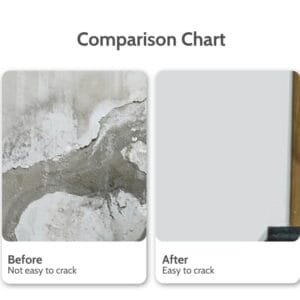
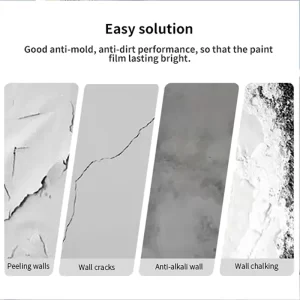
- Excellent crack resistance.
Application Scope:
- Painting for filling and leveling on building facades, walls, and other surfaces.
Main Technical Specifications:
- State in container: No lumps after mixing, uniform consistency.
- Workability: Easy to apply with a scraper.
- Impact resistance: No cracks, peeling, or noticeable deformation in the coating.